







Florida’s real estate market remains highly attractive to domestic and international buyers, but the landscape of condominium ownership has shifted significantly in recent years. In 2026, the conversation has moved beyond just location and purchase price; it is now heavily focused on the total cost of ownership, specifically the impact of Homeowners Association (HOA) fees, structural reserves, and property insurance. For buyers, understanding these financial dynamics is essential before signing a contract.
The changes are largely driven by stricter state regulations implemented after 2021, which require condo associations, particularly in older buildings, to conduct regular structural inspections and fully fund their reserves for future repairs. While these laws are crucial for safety and long-term stability, they have forced many older buildings to dramatically increase their monthly HOA dues and issue substantial special assessments to catch up on years of deferred maintenance. Coupled with rising insurance premiums across the state, the monthly carrying costs for many older condos have surged.

This dynamic has created a bifurcated market. On one side, older condominiums (typically those over 30 years old) are seeing price corrections. Buyers are demanding discounts on the purchase price to offset the higher monthly fees and the risk of future assessments. Some owners, unable to afford the new costs, are selling at reduced prices, creating potential opportunities for cash buyers or investors with a high tolerance for renovation and assessment risks.
On the other side, new construction and recently built luxury condos are capturing a larger share of buyer interest. While new developments come with a higher initial purchase price, their carrying costs are often more predictable. Modern buildings are constructed to the latest hurricane codes, which can help stabilize insurance rates, and their brand-new infrastructure means major structural repairs are decades away. For many buyers, the peace of mind and financial predictability of a newer building justify the premium.
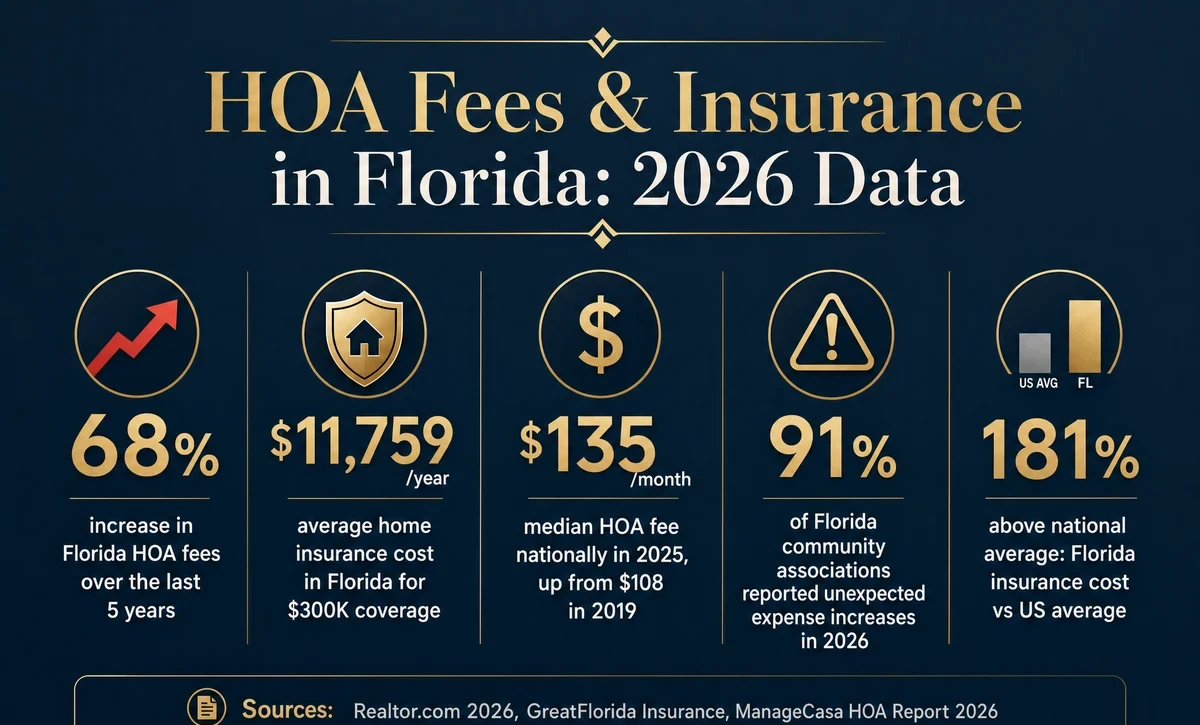
Key data: HOA fees in Florida have increased by 68% over the last five years. The average home insurance cost in Florida reaches $11,759 per year for $300,000 in dwelling coverage — 181% above the national average. The national median HOA fee reached $135/month in 2025, up from $108 in 2019. A striking 91% of Florida community associations reported unexpected expense increases in 2026. These numbers make due diligence on HOA financials and insurance coverage an essential step before any condo purchase in the state. (Sources: Realtor.com 2026, GreatFlorida Insurance, ManageCasa HOA Report 2026)
For prospective buyers, due diligence is more critical than ever. It is no longer enough to just inspect the unit; buyers must thoroughly review the condo association’s financial health, reserve studies, and insurance policies. Working with experienced real estate professionals who understand the nuances of Florida’s condo laws and can accurately project the total cost of ownership is the best strategy to ensure a sound investment.
Don’t get surprised by hidden costs. Contact Faccin Investments to safely navigate the Florida condo market with a clear understanding of the total cost of ownership.
Frequently Asked Questions
Why are HOA fees increasing in Florida?
Stricter state laws now require condo associations to fully fund reserves for structural repairs, and rising property insurance premiums are also driving up monthly costs.
Is it better to buy an older condo or new construction?
Older condos may offer a lower purchase price but come with higher risks of assessments and rising fees. New construction offers more predictable carrying costs and modern safety standards, though at a higher initial price.