

Virginia Key is entering a new conversation, but an approved management agreement is not the same as an immediate reopening or a guaranteed real estate outcome.
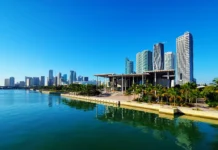
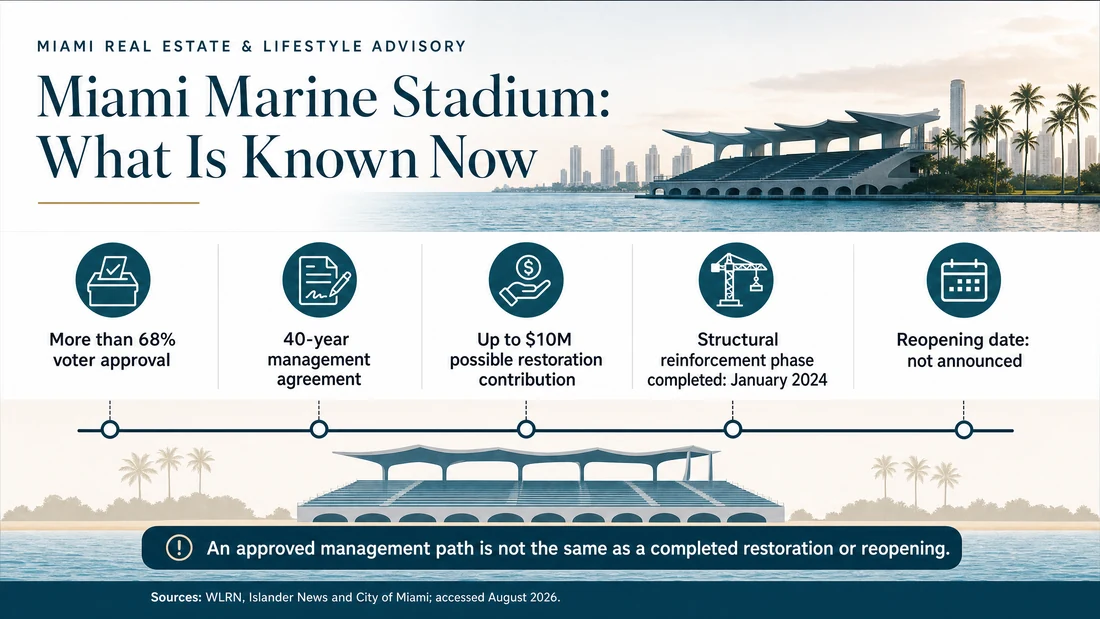
Miami voters recently approved a management agreement connected to the Miami Marine Stadium, a waterfront landmark on Virginia Key. Public reporting described a 40-year term with Global Spectrum/Spectra, an initial Flex Park concept and the possibility of a contribution of up to $10 million toward restoration, subject to the agreement and project requirements.
The vote matters because the stadium is more than a building. It is part of Miami’s cultural memory, Biscayne Bay setting and long-running conversation about how public waterfront assets should be preserved and used. For lifestyle buyers, the development is worth following. For a property decision, however, the correct approach is to separate the confirmed vote from the work that still needs to happen.
What has been approved
The referendum created a path for a long-term management arrangement. It did not create an opening date, finish the restoration or guarantee that every proposed feature will be delivered on a specific schedule. The next steps can include definitive agreements, planning, financing, technical work, approvals and construction decisions. The stadium’s future remains a process.
That distinction is important in a market where waterfront narratives can quickly become sales language. A buyer should not treat a headline about a revival as proof that a nearby property will appreciate, rent faster or outperform. Those outcomes depend on a much wider set of factors, including building quality, insurance, association governance, access, pricing and actual demand.
Why Virginia Key still matters to Miami lifestyle
Virginia Key connects several dimensions of Miami: water, outdoor recreation, heritage, event potential, downtown proximity and the sense of escape that makes the city different from a conventional urban market. The Marine Stadium’s location gives the conversation an emotional force that a standard infrastructure project does not have.
For a lifestyle buyer, the question is how often the household would actually use the surrounding environment. Would the property support boating, cycling, events, beach access, outdoor time or hosting friends? Would the route work during major events and peak traffic? Does the buyer prefer a quiet waterfront routine or a more active urban calendar? These questions produce a better location analysis than a generic promise of future upside.
The restoration story has a documented history
The City of Miami records that an earlier phase of structural reinforcement repairs was completed in January 2024.[3] That work is useful context, but it should not be confused with a fully restored, reopened stadium. Buyers and readers should look for official updates on agreements, design, financing, construction and operations as the process moves forward.
This is also a reminder that waterfront assets carry technical and financial complexity. Salt air, structural systems, resilience, public access, maintenance, event operations and insurance all matter. A compelling cultural story deserves a serious due-diligence framework.
How international buyers should use the news
The Marine Stadium can be a lifestyle signal, a cultural asset and a potential source of future activity around Virginia Key. It should not be used as a standalone investment thesis. Buyers should compare current access, the specific property’s condition, association budgets, insurance, restrictions, rental demand, exit audience and the actual timeline of any public project.
For international families, the same discipline applies to the purpose of the purchase. A second home for personal use may value access to waterfront activities. A rental-oriented purchase needs a realistic tenant profile and building rules. A long-term relocation plan requires schools, services and commute patterns. The stadium story can add context, but it cannot choose the property for the buyer.
What to watch next
Readers should follow the definitive management agreement, public planning documents, funding commitments, restoration scope, construction milestones and any official reopening information. Until those pieces are confirmed, the most credible description is that Miami has approved a path toward a possible Marine Stadium revival.
Faccin Investments helps international buyers connect Miami lifestyle, location, property analysis and ownership strategy. If Virginia Key or the waterfront is part of your search, contact Faccin Miami for a property-by-property discussion rather than relying on a single headline.