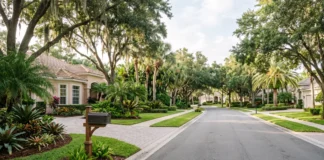



Doral’s story is no longer only about proximity to the airport or a golf course. It is about how an integrated urban environment changes the daily decision for international families.
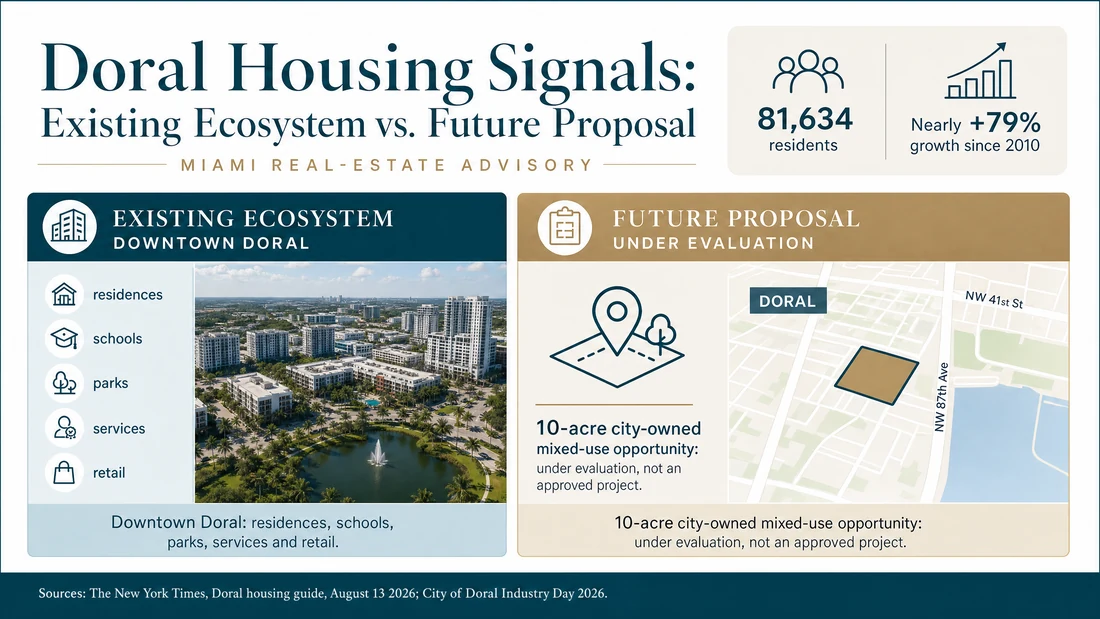
Doral has become one of the most closely watched suburban communities in Greater Miami. The New York Times recently described the city as a fast-growing area between Miami International Airport and the Everglades, with a population of 81,634 and growth of nearly 79% since 2010. That scale matters because it changes the question buyers ask. The conversation is no longer simply whether Doral is convenient. It is whether its schools, parks, services, housing and daily rhythm fit the family’s long-term plan.
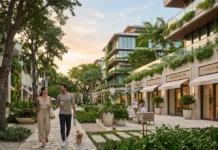
Downtown Doral gives the city a particularly useful case study. Its mixed-use environment brings residences, schools, healthcare, government services, restaurants, retail, parks and more walkable connections into one recognizable center. For Latin American families, that can reduce the friction of settling into a new market. But a strong lifestyle ecosystem is not the same as a guarantee that every property will appreciate or suit every buyer.
What families are really buying in Doral
A home in Doral is often evaluated as a package of time savings. Parents may compare school access, commuting routes, parks, groceries, healthcare and the ability to handle everyday tasks without crossing the entire county. Entrepreneurs and professionals may value proximity to the airport and major road corridors. Buyers who expect guests or future relocation may appreciate a neighborhood that feels legible from the first visit.
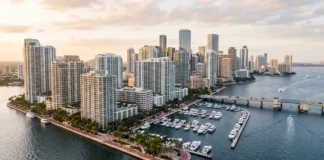
This does not make Doral interchangeable with Brickell, Coral Gables, Coconut Grove or Miami Beach. The housing product, density, lifestyle, tenant profile and relationship with the urban core are different. Doral can be a strong fit for a family seeking a planned suburban environment, while another buyer may prioritize waterfront access, nightlife or a shorter commute to a different employment center.
Downtown Doral and the use-mix advantage
The value of a mixed-use center is not simply that it looks attractive. It is that it combines several daily destinations and creates a recognizable local identity. Residents can evaluate a neighborhood not only by the unit, but by the routine around it: walking routes, green space, schools, services, restaurants and the way the public realm feels at different times of day.
That analysis should include the less visible side of the equation. Buyers need to understand association costs, insurance, traffic, school boundaries, rental rules, building age, future construction and the difference between a master-planned vision and the conditions delivered today.
A possible 10-acre opportunity is not an approved project
The City of Doral has published an Industry Day notice involving a potential mixed-use development opportunity on approximately 10 acres of city-owned land. That is relevant to the city’s planning conversation, but it should be described accurately: an opportunity under evaluation is not the same as an approved development, a construction contract or a property currently available for purchase.
For buyers, the practical takeaway is to ask what is confirmed, what is proposed and what remains subject to approvals, negotiation, financing and design. This distinction protects the buyer from treating a future concept as if it were already part of the neighborhood’s delivered amenities.
How international families should compare Doral
A serious comparison should start with the family’s calendar. How many school, work and airport trips happen each week? Does the household prefer a townhouse, condo or single-family home? Is the property for a primary residence, a future relocation, a second base or a rental strategy? What are the association rules, insurance costs and maintenance expectations?
For Latin American buyers, the ownership structure and cross-border planning also deserve early attention. The property should be reviewed with qualified real estate, legal, tax and lending professionals as appropriate. A walkable center can improve daily convenience, but it does not eliminate the need to examine title, contracts, reserves, inspections, insurance and exit strategy.
Doral’s next phase should be read with discipline
The city’s growth creates opportunity for more services, housing choices and local identity. It can also bring traffic, construction cycles, association complexity and differences between subareas. The best buyer is not the one who repeats a neighborhood slogan. It is the one who tests whether the actual property supports the family’s routine, budget, risk tolerance and future plans.
Faccin Investments helps international families compare Miami neighborhoods, property types, ownership costs and acquisition strategy. If Doral is on your shortlist, contact Faccin Miami to review the difference between an attractive urban story and a property that truly fits your needs.