







A post-election update—with an important status label
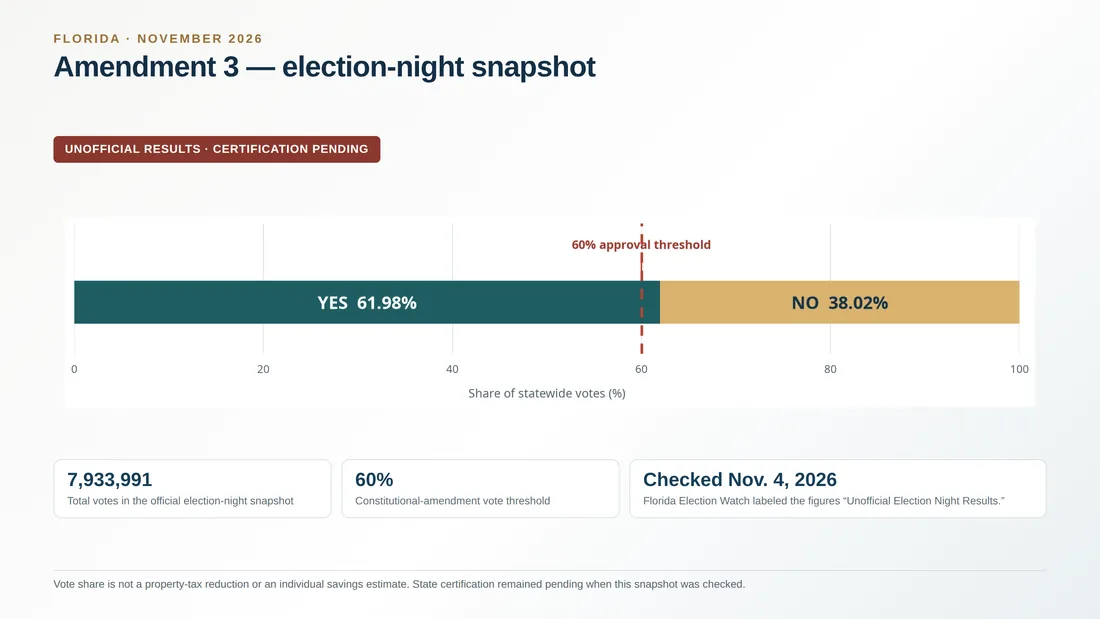
Florida voters considered Amendment 3 on November 3, 2026. When checked on November 4, the Florida Election Watch page showed 61.98% Yes and 38.02% No, with 7,933,991 total votes. The page labeled its figures Unofficial Election Night Results. Although the Yes share was above Florida’s 60% threshold for constitutional amendments in that snapshot, the statewide result had not yet been certified.
That distinction matters for property owners. A preliminary election-night tally is not the same as a certified result, and it can be updated during canvassing. Florida law schedules the Elections Canvassing Commission to meet on November 17, 2026, to certify the returns for the general election and constitutional amendments. Until that process is complete, describe the outcome as preliminary and do not treat a proposed tax change as already implemented.
What the amendment proposes if it takes effect
The amendment text proposes increasing the homestead exemption for non-school property taxes to $150,000 in 2027 and $250,000 in 2028, followed by future inflation adjustments. It also proposes lowering the annual assessment cap for non-homestead properties from 10% to 5%. The proposed effective date is January 1, 2027, subject to the official election outcome and implementation.
The distinction between school and non-school taxes is essential: the change concerns the non-school portion, while school property taxes remain unchanged under the proposal. A homestead exemption also does not mean that a percentage of a property’s entire bill disappears. The taxable value, eligibility, local tax rates and other details determine how a rule applies to a particular owner.

What a Florida homeowner should monitor next
First, look for the state’s certified election result. Next, watch for updated instructions from the county property appraiser and the Florida Department of Revenue. The Miami-Dade Property Appraiser’s current homestead page explains the existing exemption process, including the general residency and application framework, but it does not yet provide a complete post-certification implementation guide for Amendment 3.
Current homestead rules generally focus on a Florida permanent residence as of January 1 and an application deadline of March 1. Do not assume that those existing procedures answer every question about a future increase. Owners should confirm the current instructions, filing requirements and effective dates directly with the property appraiser when updated guidance is issued.
For a property in another Florida county, consult that county’s property appraiser rather than relying on Miami-Dade procedures. Buyers who are under contract or planning a move should also distinguish their personal eligibility from the amendment’s statewide status. A vote share is not a tax calculation, and a statewide constitutional change does not automatically establish an individual homeowner’s savings.
Keep the vote number in perspective
The 61.98% figure is the preliminary share of Yes votes in the official election-night snapshot consulted on November 4. It is not a 61.98% property-tax reduction. The 60% threshold is a voting requirement, not a description of the financial benefit to a household. Those numbers answer different questions and should not be conflated.
Was Amendment 3 certified on November 4?
No. The Florida Election Watch page labeled the figures Unofficial Election Night Results. State certification remained pending when the snapshot was checked.
Does 61.98% mean property taxes fall by that amount?
No. It is the preliminary share of Yes votes, not a tax reduction. The proposal concerns the non-school portion of qualifying homestead property taxes and remains subject to certification and implementation.
Where should owners check for application instructions?
Check the Florida Department of Revenue and the property appraiser for the county where the home is located. Miami-Dade’s existing homestead page may not yet reflect all future procedures.
Follow the official steps before making plans
Florida property-tax rules can depend on the home, owner and local assessment. Keep the preliminary result separate from a personal tax estimate, and verify new instructions when authorities publish them. For real estate questions related to a Florida move or purchase, contact Faccin Investments to discuss your plans and the information you should confirm with the relevant county office.