







Lower asking rents can create a more realistic entry point for tenants. For an investor, they are a reminder that a rental property must work as an operating business—not as a spreadsheet built around the most optimistic listing.
Miami’s median asking rent was US$2,277 in June 2026, down 2.6% from a year earlier, according to Realtor.com. The same reporting linked part of the moderation to an expanding apartment pipeline, with multifamily permits reaching 2.6 new units per 1,000 residents in 2025. This is a useful market signal, but it is not a universal verdict on every neighborhood, building or lease type.
For a foreign investor, a softer rent environment changes the question. Instead of asking, “What rent can I advertise?”, the better question is, “What rent, vacancy, fee and compliance assumptions can this property absorb and still fit my objectives?” The answer depends on the asset, the building, the tenant profile and the rules that govern the intended rental model.
Why a headline rent is not enough
Gross rent is only the top line. A rental thesis needs a full operating view: association fees, property taxes, insurance, furnishing, utilities, management, leasing cost, maintenance, reserves for replacements and periods without a tenant. Foreign owners should also consider how they will supervise the property, approve repairs and receive reporting from a manager.
A market with more supply may offer renters more choice. That can require owners to compete through price, condition, furnishings, flexibility or service. A property that looked attractive using an aggressive rent estimate can become far less compelling when the model includes a realistic vacancy allowance and the current cost of ownership.

Long-term rental, short-term rental or personal use?
These are different operating models. Long-term rentals may offer more predictable occupancy but still depend on tenant demand, building policy and management. Short-term rentals can have different revenue patterns, higher operating complexity and specific regulatory requirements. In Miami-Dade’s unincorporated areas, a short-term vacation rental generally means a rental of less than 30 days or one calendar month, whichever is less, and the county lists licensing, registration, tax and Certificate of Use requirements. Municipal rules and condominium documents can be more restrictive.
The City of Miami also identifies locations and property types that are not eligible for short-term rental or lodging use. That is why an investor should confirm the municipality, zoning context, association rules and required registrations for the exact property—not rely on a generic statement that “short-term rental is allowed in Miami.”
The figures below provide a concise 2026 market check. They should be used to frame research, not to calculate a personalized return.
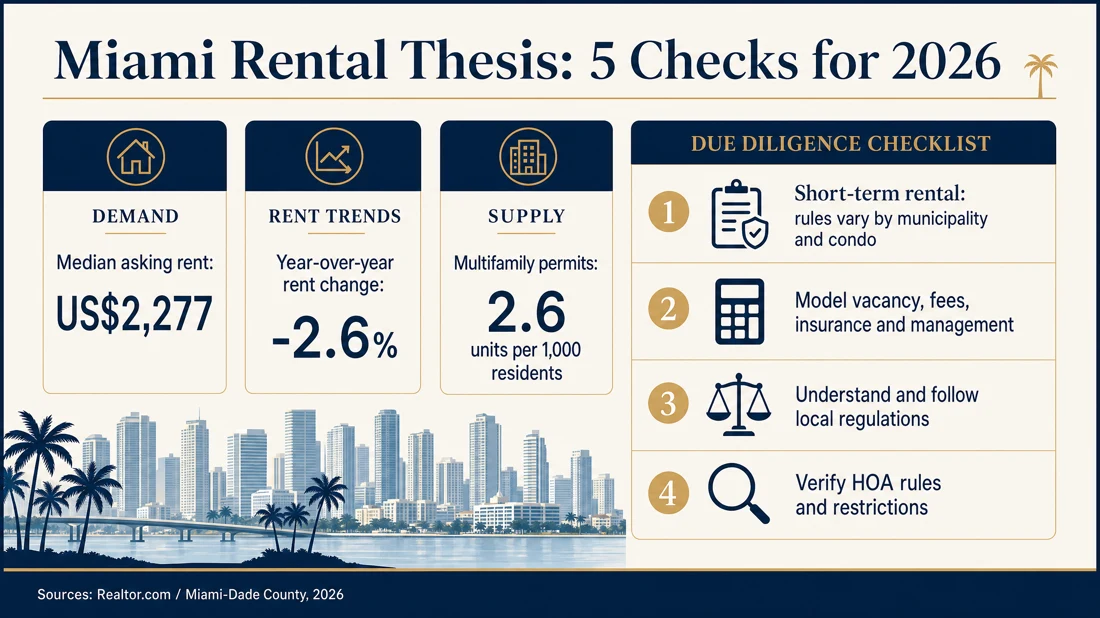
A practical stress test for a foreign owner
Use a conservative rent range. Compare several active and recently leased units that match the property’s location, condition and building rules. Do not base the model on one exceptional listing.
Include vacancy and turnover. A full-year spreadsheet should allow for leasing time, cleaning, repairs and unexpected replacements.
Read the condominium documents. Minimum lease periods, application procedures, tenant limits, move-in fees and management approval can materially change the operation.
Confirm local compliance. For any short-term strategy, check the exact municipality and community association, then obtain legal and tax guidance appropriate to the owner’s situation.
Define the exit plan. A property can be held for income, personal use, appreciation potential or a mix. The exit audience and future carrying costs should be part of the initial decision.
Where opportunity can still exist
A cooling rent headline does not mean that Miami is no longer investable. It means the investment case needs to be specific. A well-located property with sensible carrying costs, clear rental rules and a realistic management plan can serve the right owner. The discipline is to avoid treating a market-wide average as a promise for one unit.
Faccin Investments can help foreign buyers compare neighborhoods, building rules, operating assumptions and ownership objectives before they make a rental-driven purchase. Contact Faccin Miami to structure the property search around the use case you actually need to solve.
Editorial note: This article is informational only and is not legal, tax, investment, insurance or property-management advice. Rental rules and outcomes vary by property, municipality, association, contract and market conditions.
Sources: Realtor.com rental report; Miami-Dade County short-term vacation rental guidance; City of Miami short-term rental procedures; MIAMI REALTORS June 2026 market data.