





Miami condominiums can offer lifestyle, liquidity and a path into a global market. In 2026, the strongest buyers are treating the building’s financial and operational condition as seriously as the unit’s view and floor plan.
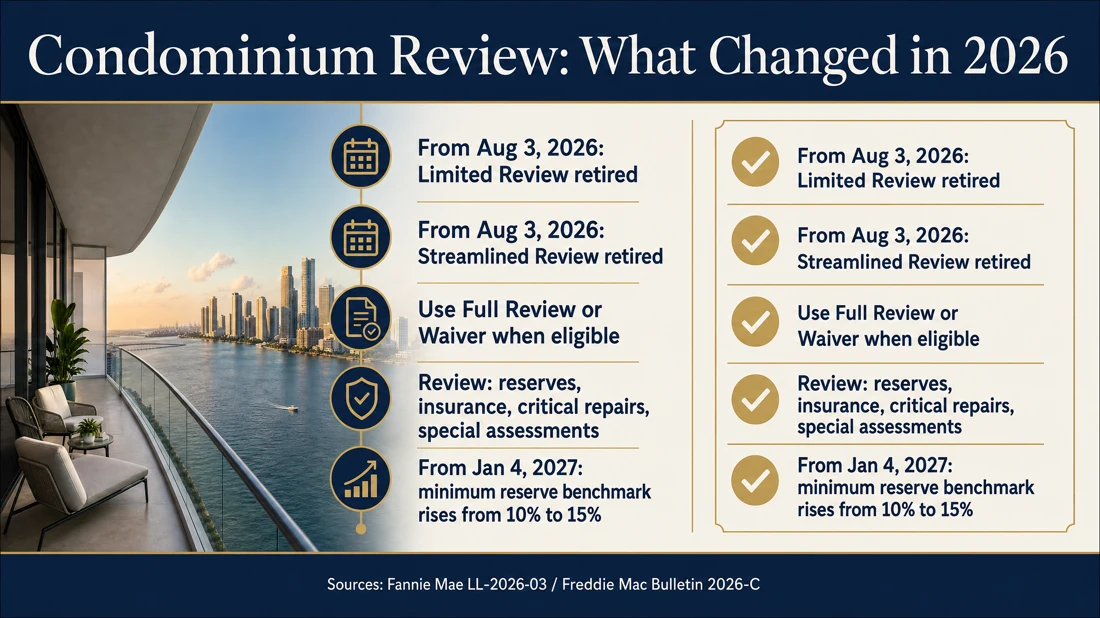
On August 3, 2026, Fannie Mae retired its Limited Review process for condominium projects and Freddie Mac retired its Streamlined Review process. Depending on the loan and project, lenders now work through a Full Review or a Waiver when eligible. The policy changes are not a reason to avoid condominiums. They are a reason to start due diligence earlier—especially for foreign buyers comparing pre-construction, newer construction and resale inventory.
For an all-cash buyer, lender rules may still matter because they signal the documents and building conditions that future financed buyers could scrutinize at resale. For a buyer planning financing, the effect can be more direct: project eligibility, reserves, insurance, critical repairs and special assessments may influence the lending path and timeline.
What changed—and what did not
The 2026 bulletins did not create a single universal test for every condominium. They changed review pathways and reinforced the importance of project-level information. Fannie Mae’s update also set a future increase in the minimum reserve benchmark from 10% to 15% for certain Full Reviews beginning January 4, 2027. Freddie Mac announced a parallel retirement of Streamlined Review and related review updates.
What did not change is the need to understand the actual building. A buyer should not assume that a new tower is automatically simpler, that an established building is automatically riskier, or that a lender decision replaces independent legal, inspection and association-document review.

Pre-construction requires a separate layer of questions
Pre-construction can be attractive because it gives the buyer a construction timeline, new systems and a chance to choose among early inventory. It is also a contract-driven purchase. Deposit schedules, estimated delivery language, permitted changes, assignment rules, association projections, rental restrictions and closing obligations should be reviewed before a reservation becomes a commitment.
MIAMI REALTORS reported that international buyers played an outsized role in sampled new-construction, pre-construction and condo-conversion activity in South Florida. The same local market context also noted that new construction is not fully captured by standard MLS data. That is why a buyer should evaluate a project through its documents, developer track record, location and likely post-delivery competition—not through sales-gallery momentum alone.
The checklist below summarizes the regulatory timing and the practical areas that merit professional review. It is an educational summary, not a lender decision or a substitute for project-specific advice.
Why this matters in a buyer’s condo market
Miami-Dade condominium inventory reached 12.3 months of supply in June 2026, according to MIAMI REALTORS. More inventory can improve choice, but it also makes it easier to compare buildings that look similar from a distance and behave differently after closing. Association fees, insurance, reserves, scheduled repairs and governance are not side notes; they are part of the asset.
For a foreign buyer, the underwriting question should be broad: What is the total cost of ownership? What is the project’s rental policy? What documents are available now? Is the anticipated use personal, long-term rental, future relocation or a combination? What could a future buyer or lender need to review at resale?
A due-diligence sequence worth following
Start with the use case. Decide whether the property is primarily lifestyle, rental, future relocation or a mixed objective.
Request project documents early. Review association financials, insurance, reserve information, minutes, repair history, assessments and rental rules with the right professionals.
Separate the unit from the project. A desirable line or view does not eliminate project-level issues. Conversely, a sound project does not make every unit equally liquid.
Stress-test the timeline. For pre-construction, match deposit dates and closing assumptions to the buyer’s capital, currency and life plan.
Talk to Faccin before reserving a Miami condominium
Faccin Investments helps international buyers compare Miami condominium opportunities through the lens of location, project quality, ownership costs, contract structure and future liquidity. Contact Faccin Miami before reserving a unit or relying on a financing assumption.
Editorial note: This article is informational only and is not lending, legal, tax, insurance or investment advice. Condominium and loan eligibility depend on the individual borrower, unit, project, lender and current rules.
Sources: Fannie Mae Lender Letter LL-2026-03; Freddie Mac Bulletin 2026-C; MIAMI REALTORS June 2026 market data; MIAMI REALTORS 2026–2027 outlook.