

Over the past decade, Miami has established itself as the global capital of branded residences in the Western Hemisphere. From luxury automakers to high-fashion houses and elite hospitality groups, partnering with a recognized brand became a proven formula for developers to differentiate their projects and command premium prices. However, as the market matures in 2026, the dynamics are shifting. Buyers are becoming more sophisticated, recognizing that a famous logo on the facade is not enough to guarantee a superior living experience or long-term value.
The initial appeal of a branded condo is clear: it promises a specific lifestyle, design aesthetic, and level of service associated with a trusted name. However, recent market cycles have demonstrated that not all brand partnerships are created equal. When developers rely heavily on marketing rather than substantive building quality, the results can fall short of buyer expectations. Issues with delayed deliveries, unmet amenity promises, and construction quality have led today’s buyers to ask deeper questions before committing.
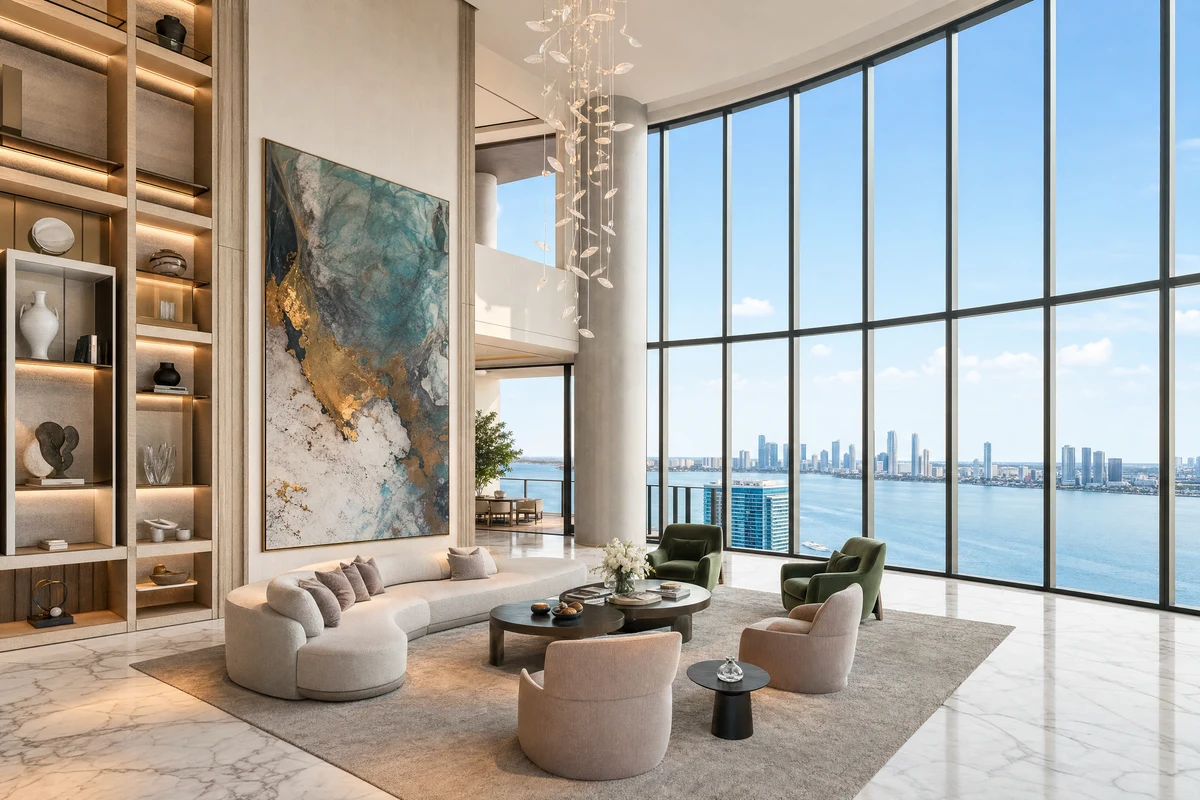
The focus is now shifting from the brand itself to the developer’s track record and the actual execution of the project. Buyers want to know: can the developer deliver on the promised lifestyle? Are the amenities functional and well-managed? Does the building offer intrinsic value beyond its name?
This evolution is leading to a clear divergence in the market. Hospitality-driven brands — those with a deep understanding of service, property management, and residential needs — continue to perform exceptionally well. Brands like Four Seasons, Mandarin Oriental, and Ritz-Carlton command strong premiums because they deliver a tangible, high-quality daily experience. In contrast, brands with no inherent connection to residential living must work much harder to prove their value proposition translates into practical, long-term real estate value.
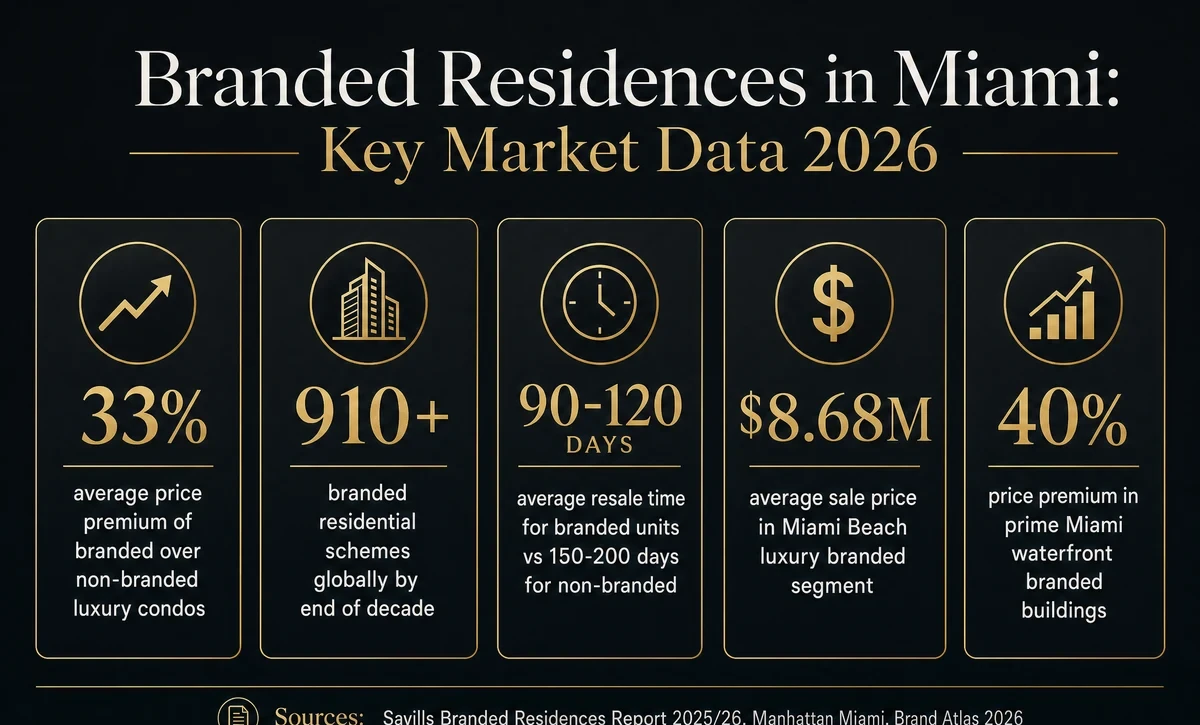
Key data: Branded residences command an average 33% price premium over comparable non-branded luxury condos globally, reaching 40% in prime Miami waterfront buildings. Branded units sell in 90–120 days on average, compared to 150–200 days for non-branded equivalents. The Miami Beach luxury branded segment posts an average sale price of $8.68 million. Globally, over 910 branded residential schemes are projected by end of the decade. (Sources: Savills Branded Residences Report 2025/26, Manhattan Miami, Brand Atlas 2026)
Interestingly, this saturation of branded projects is also creating opportunities for non-branded, ultra-luxury developments. Projects that invest their capital into superior architecture, innovative amenities, and flawless construction — rather than licensing fees — are finding a highly receptive audience. For the modern buyer, whether a building is branded or not, the ultimate luxury is a flawless execution that enhances their daily life.
Need guidance? Navigating Miami’s luxury condo market requires looking beyond the marketing. Contact Faccin Investments to evaluate which developments offer true quality and long-term value.
Frequently Asked Questions
Are branded condos a good investment in Miami?
Yes, but the value depends heavily on the developer’s ability to execute and the brand’s connection to actual residential service and lifestyle.
Do non-branded luxury condos hold their value?
Absolutely. High-quality, non-branded developments in prime locations often hold strong value by focusing on superior construction and amenities rather than licensing costs.