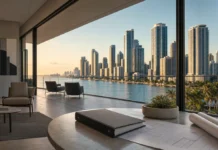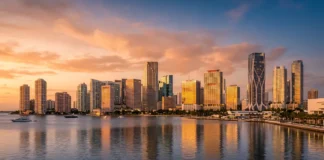

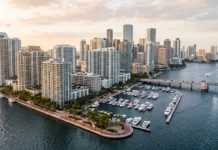

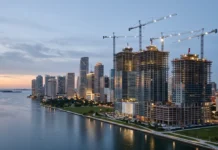



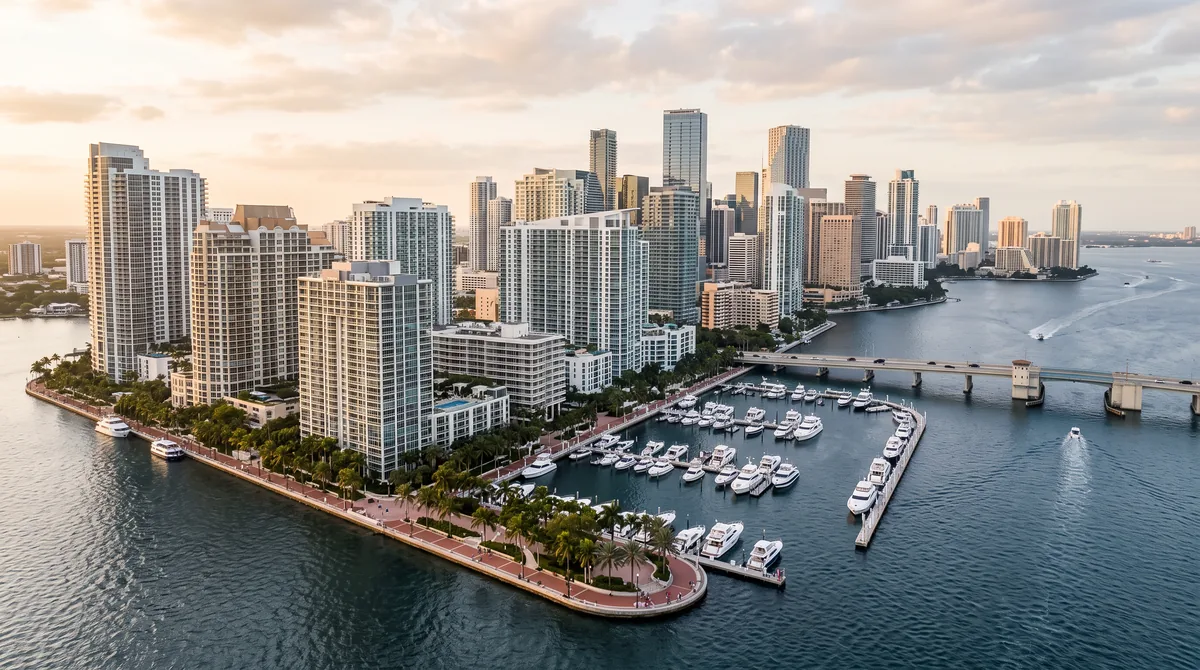
On October 5, 2026, construction commenced on The Residences at Mandarin Oriental, Miami—two architecturally distinct towers rising from the former Mandarin Oriental hotel site on Brickell Key. The controlled demolition took place less than six months earlier. With more than $1.7 billion in sales across both towers before the first slab, this is Swire Properties’ first branded residential development globally and its largest luxury residential undertaking to date, with delivery planned for 2030 (subject to change).
Big pre-sales numbers get attention. They should also trigger sharper questions. Below is a practical framework to evaluate what this milestone does—and does not—tell a buyer considering a position today in the Mandarin Oriental Miami residences.
The project at a glance
The plan comprises a 33-story North Tower and a 66-story South Tower connected by a 100,000-square-foot amenity podium serviced by Mandarin Oriental Hotel Group. The North Tower will be the brand’s North American flagship hotel with 121 guest rooms, plus 70 private residences and 28 turnkey Hotel Collection residences. The South Tower is dedicated to 228 private residences.
Designers include Kohn Pedersen Fox as architects, AD100 designers Laura Gonzalez (North Tower) and Tristan Auer (South Tower), with landscape architecture by SHMA. Sales are managed by Fortune Development Sales.
As of the latest developer update, the South Tower is about 80% sold and remaining residences start at $7 million; the North Tower reached roughly 25% sold since the Signature Gallery opened in May 2026, with remaining residences starting at $4 million. Availability, pricing and dates are subject to change.
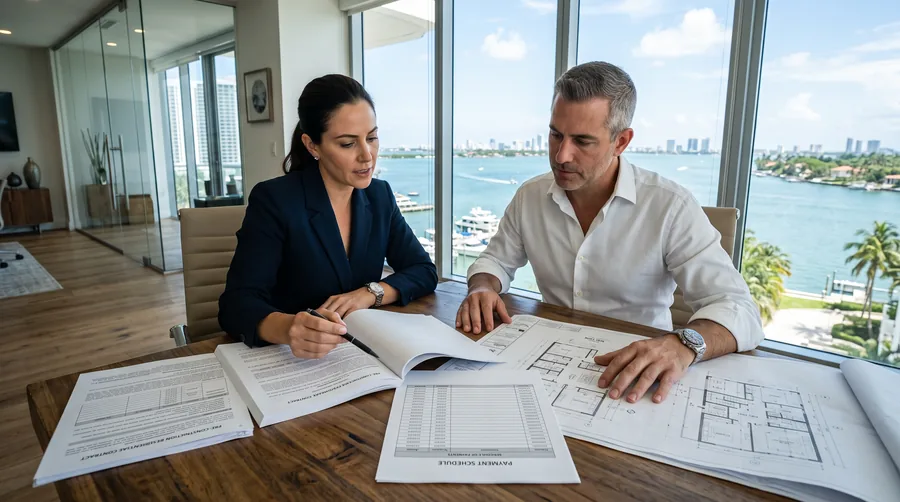
What pre-groundbreaking sales velocity actually signals
Crossing $1.7 billion in pre-sales, including more than $620 million in 2026 and a three-month summer stretch above $150 million, signals product–market fit at the ultra-luxury level. The elements resonating are clear: island setting minutes from Brickell’s business core, a globally recognized hospitality operator, large amenity program, and design pedigree.
Sales velocity does not, by itself, forecast future pricing, liquidity, or exit conditions. In Miami, pre-construction demand often follows a staged-deposit model and the appeal of locking specific lines, views, and floor plans in limited-supply tiers. The developer has pointed to predominantly domestic buyer demand to date. That is useful context; it should not be repackaged as evidence for international or regional demand flows.
Treat velocity as a confidence indicator in the program’s positioning and a potential risk-mitigator for execution (more deposits typically support construction finance and continuity). It is not a guarantee of how the wider market—or this asset—will behave by 2030.
Record price per square foot: a benchmark, not your reference
Two crown penthouses sold to separate buyers for $49.9 million each, setting mainland Miami records for condominium sale price and around $6,300 per square foot. That matters for headline validation, but it is not a comp for the rest of the building.
Penthouse pricing reflects one-off conditions: scale, ceiling heights, wraparound exposures, and full-floor uniqueness. Even within the same tower, vertical view corridors, line orientation, and layout efficiency can move price meaningfully. Buyers should build their own stack-level and line-by-line view of value, rather than extrapolate from the record.
2030 delivery: timing, deposits, and risk to manage
A 2030 delivery (subject to change) makes this a multi-year planning decision. Consider:
-
Deposit plan and escrow: Understand when funds move, where they sit, and under what conditions they become non-refundable. Review any outside completion date, force majeure language, and buyer remedies if delivery shifts.
-
Specification and substitution rights: Pre-construction materials, finishes, and appliance schedules can evolve. Verify the developer’s substitution rights, tolerance ranges, and what triggers a buyer’s recourse, if any.
-
Operating costs on stabilization: Projected association budgets, hotel-service fees, reserves, and amenity staffing are estimates. Ask for the draft condo budget, service schedules, and method for future increases and special assessments.
-
Use and rental rules: If you anticipate personal, seasonal, or rental use, verify permitted durations, blackout periods, and any hotel-related restrictions—especially for Hotel Collection residences.
Time works in both directions. It can provide construction de-risking and more certainty on Brickell Key infrastructure improvements; it also adds years of market, rate, and policy variability that no one can price today.
Key metrics and what they mean
- Sales passed $1.7 billion across both towers before groundbreaking.
- In 2026 alone, sales exceeded $620 million, including a record three-month summer period above $150 million.
- South Tower: about 80% sold; remaining residences starting at $7 million.
- North Tower: about 25% sold since May 2026; remaining residences starting at $4 million.
- Two crown penthouses sold at approximately $6,300 per square foot.
- Delivery planned for 2030, subject to change.
Treat these as project-level signals, not personal pricing guidance. Availability, pricing, and timelines can change without notice; confirm current status with the sales team and your advisors.
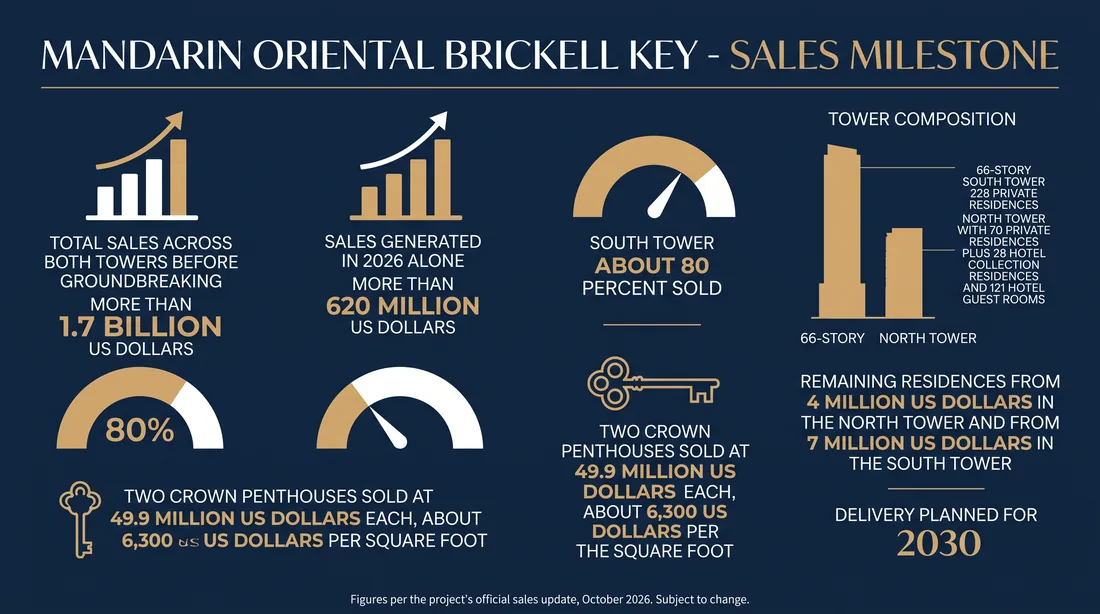
Note: the infographic is provided in English for all language versions.
Brand standards vs contracts: what to verify
The value proposition rests on the hotel: branded residential service, wellness, dining, and hospitality standards delivered by Mandarin Oriental Hotel Group. That is both a strength and a dependency. Distinguish between the brand promise and what the governing documents obligate.
Documents worth reviewing with experienced counsel include:
-
Purchase agreement and disclosure package: deposit schedule, escrow arrangements, outside completion date, force majeure, assignment rights, rescission terms, and dispute resolution.
-
Declaration of condominium and bylaws: unit use rules, rental restrictions and durations, pet policies, noise and nuisance provisions, and rights to modify common elements.
-
Budget and fee schedules: association dues, hotel-service or club fees, reserve contributions, and mechanisms for future increases and special assessments.
-
Hotel and service agreements (or summaries): service level standards, access rights to amenities, priority rules between hotel guests and residents, operating hours, and any blackout periods.
-
Brand/license and management continuity: rights and procedures if the hotel operator changes, rebranding triggers, and remedies if service standards are not met.
-
Construction and specification exhibits: finish schedules, appliance brands, tolerance allowances, substitution rights, and view disclosures.
-
Warranties and punch-list process: unit and common area warranty durations, claim procedures, and timetables for correction.
These items define the real, enforceable experience of owning in a branded residence. Validate them, don’t assume them.
Frequently asked questions
Does $1.7 billion in pre-sales mean prices will keep rising?
No. It shows current demand for this program at today’s terms. It is not a forecast of future pricing or liquidity. Treat it as a positioning signal, not a return indicator.
Are hotel-level services guaranteed to condo owners?
Services are defined in the governing documents and service agreements, and typically depend on the hotel operation. Confirm what is included, what is discretionary, and any limits or blackout periods.
Can I rent my residence?
It depends on the condominium’s use and rental rules, which can differ by tower and product type. Verify minimum lease terms, frequency, and any hotel-related restrictions before signing.
What if delivery timing changes?
Check the purchase agreement for the outside completion date, permissible delays, force majeure clauses, and remedies available to buyers. Discuss options with your own legal advisor.
How to approach a purchase at The Residences at Mandarin Oriental, Miami
- Define the goal: end-use residence, pied-à-terre with occasional rental, or a long-hold asset for personal use.
- Build a line-by-line value map: stack height, exposures, floor plan efficiency, and adjacency to key amenities.
- Model the all-in cost of ownership: association dues, brand-service fees, reserves, and expected operating costs at stabilization.
- Stress-test timing: deposit schedule, delivery windows, and how changes could affect your plans.
- Underwrite the service dependency: review hotel-service access, standards, and continuity protections in the documents.
- Engage advisors early: experienced counsel for contract review and a mortgage or wealth advisor if relevant to funding plans.
The Mandarin Oriental Miami residences on Brickell Key combine a proven hospitality operator with an island setting next to Miami’s financial core. The pre-groundbreaking milestone validates the concept; your decision should be anchored in the documents that will govern your ownership experience. For context, pricing, availability, and timelines are subject to change—verify current details directly and align them with your objectives. If you are considering this address or alternatives across Miami’s top-tier branded inventory, we can help you structure a disciplined, document-first process that fits your goals. Contact Faccin Investments