







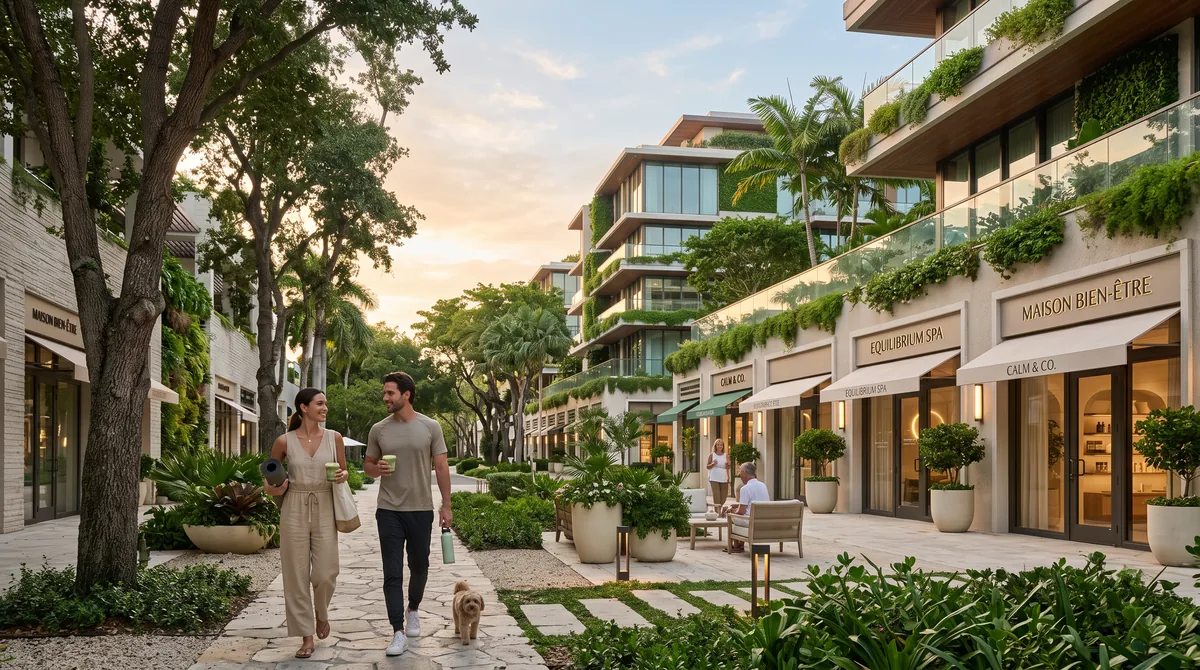
For a Latin American buyer, wellness in Miami is no longer only a line in a condominium brochure. It is becoming a way to read a location: what services sit nearby, how a building is operated, and whether the daily experience matches the way a family intends to use a second home or a new residence. The relevant question is not whether a project uses the word “wellness,” but what that word means in the documents, the budget and the practical routine of the building.
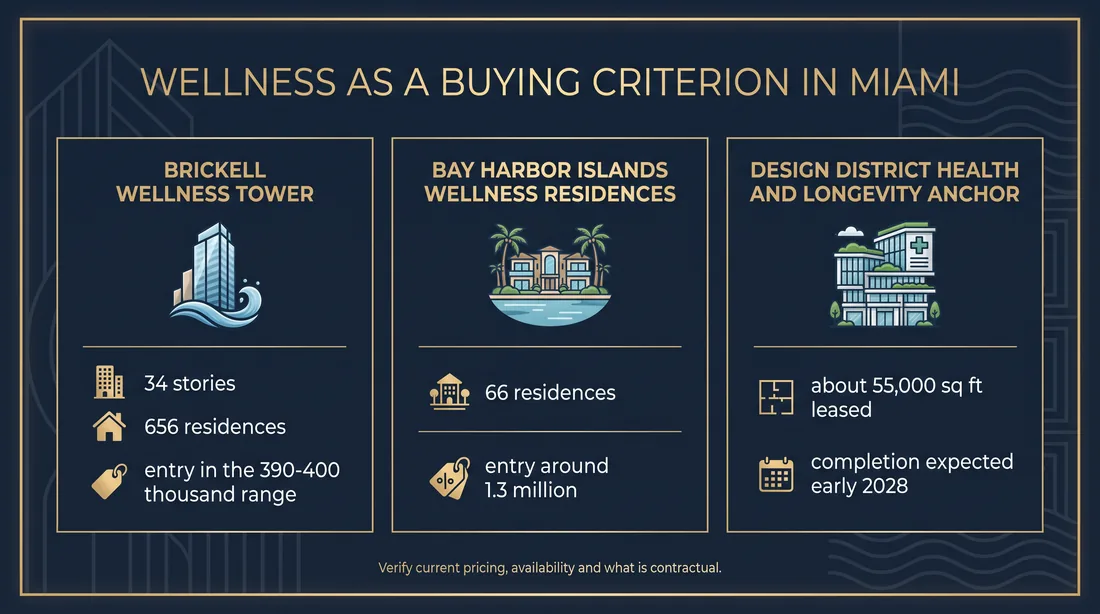
The Miami Design District offers a clear example of how this shift is reaching the urban fabric. A new eight-story mixed-use building designed by Snøhetta has Atria Health and Research Institute as its first confirmed tenant. Atria signed approximately 55,000 square feet across three floors, with a private ground-floor entrance. Groundbreaking took place on September 30, 2026, and completion is anticipated in early 2028. The building is adding approximately 120,500 square feet of office and retail space to the neighborhood, including about 22,500 square feet of retail and more than 92,000 square feet of office.
Atria describes a membership-based preventive health and longevity offering and already operates in New York, Los Angeles and Palm Beach. An alternative asset manager founded by a well-known investor has also committed space in the same building. Together, these commitments illustrate a commercial district where health, longevity, finance, design and retail are presented in one address. They do not, by themselves, establish what a future resident can use, what a membership costs or what is guaranteed under a residential contract.
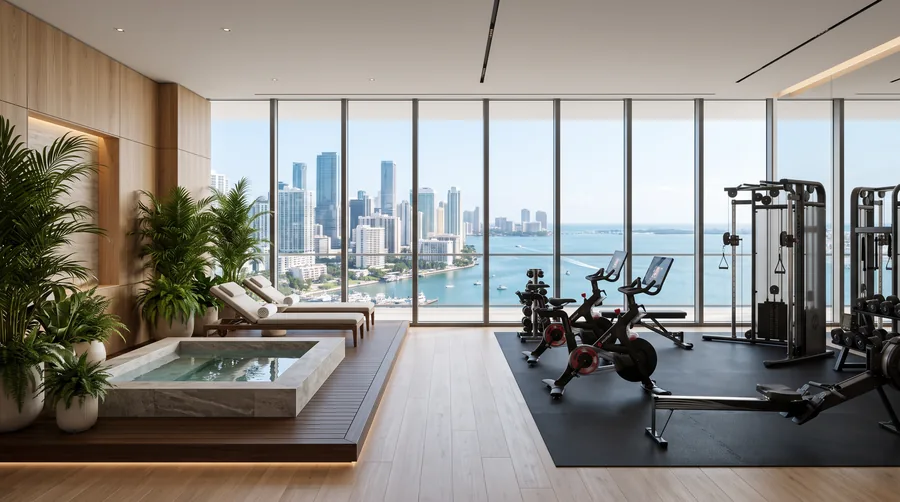
That distinction matters in the residential segment. House of Wellness Brickell is a 34-story tower with 656 residences, including studios and one- and two-bedroom layouts, and more than 22,000 square feet of dedicated wellness amenities. Entry pricing has been reported in the range of US$390,000 to US$400,000. THE WELL Bay Harbor Islands offers 66 residences starting at about US$1.3 million, with more than 22,000 square feet of amenities. A Nobu-branded tower in Brickell markets wellness and longevity programming as part of its amenity package. These are different building profiles, not interchangeable products.
A buyer should therefore compare the promise, the physical scale and the financial structure at the same time. A smaller, more exclusive residence count may create a different experience from a 656-residence tower. A branded program may be described broadly while specific services sit behind a separate membership. A wellness room may be available to residents, while a medical or longevity service may have its own operator, eligibility rules or charge. The brochure can start the conversation; the condominium documents and contracts must finish it.
Use a simple framework: identify the operator, locate the obligation, separate the charge and review the plan if the service changes. That keeps the buyer focused on the product rather than only on its lifestyle image.
The first verification is the operator. Ask which company runs each program, whether the operator is named in the declarations or another binding document, and what exactly the association is required to provide. Confirm whether the program is included in the association budget or charged separately. If there is a membership, request the membership terms, renewal language and cancellation conditions. The objective is to know the difference between a shared building expense and an optional service purchased directly by a resident.
The second verification concerns availability. If the project describes medical or longevity services, ask whether the relevant providers are licensed for the services they offer and whether those services are actually available to residents under defined conditions. Confirm spa and fitness hours, reservation rules, capacity, guest access and staffing. A beautiful amenity plan is not the same as a schedule, a team or a guaranteed level of access. The buyer should be able to see how the service works on an ordinary week, not only in a sales presentation.
The third verification is continuity. Ask what happens if the wellness operator leaves, changes its model or is replaced. Review termination rights, replacement procedures and the allocation of costs. Also ask what portion of the monthly cost is connected to wellness, directly or through the association budget. This is especially relevant for a family comparing ownership with long stays, a relocation plan or a property for personal use. A service can be attractive and still deserve a precise budget line.
Location remains broader than the amenity package. Proximity to hospitals, medical offices and everyday services still matters because a second home or relocation is lived beyond the tower. Families should map the practical routine around the address: access to daily shopping, work patterns, schools or other services relevant to their plans, and the ease of moving between the residence and the wider Miami area. Wellness may be a location criterion, but it does not replace an analysis of the surrounding neighborhood or the property’s operating structure.
A comparison for the consideration stage
| Project or setting | Profile to understand | Price information provided | Questions to verify |
|---|---|---|---|
| House of Wellness Brickell | 34 stories, 656 residences, studios and one- and two-bedroom layouts, more than 22,000 sq. ft. of wellness amenities | US$390,000–US$400,000 entry range | Which amenities are included, who operates them, and what is charged separately? |
| THE WELL Bay Harbor Islands | 66 residences and more than 22,000 sq. ft. of amenities | Starting at about US$1.3 million | What does resident access cover, and how are ongoing wellness costs structured? |
| Nobu-branded tower in Brickell | Wellness and longevity programming marketed in the amenity package | Not specified here | What is contractual, what is optional, and what happens if the program changes? |
| Miami Design District mixed-use context | Eight stories; Atria’s approximately 55,000 sq. ft. across three floors; office and retail context | Not a residential price comparison | How does the surrounding health and services ecosystem fit the buyer’s routine? |
FAQ
Is a wellness program automatically included in the monthly association cost?
No. Ask for the association budget and the governing documents to determine what is included. A membership, treatment, class or other service may be charged separately, and the distinction should be clear before signing.
Does a wellness brand guarantee a specific resident experience?
No. Marketing language should be separated from contractual obligations. Verify the operator, hours, capacity, staffing, access rules and the process for a change or departure by the operator.
Why should hospitals and medical offices remain part of the location analysis?
Because the residence is used in real life, not only inside its amenity areas. Proximity to hospitals, medical offices and everyday services is part of understanding the location for a second home or relocation.
How should a Latin American buyer compare different price bands?
Compare residence count, layout, amenity scale, included services, separate charges and the full monthly cost. A lower entry price and a higher starting price represent different building profiles; neither should be assessed from the wellness label alone.
CTA
For a tailored comparison of projects, documents, operating costs and location priorities, prepare your questions before reviewing a purchase and Contact Faccin Investments.