





A Miami home can look perfect in a listing and still be a poor fit for the animal that shares your routine. A balcony without shade, a long elevator ride, or a building that limits dogs by weight can matter more than a renovated kitchen. For buyers moving from another U.S. city or abroad, the pet question belongs in the first property screen.
The right goal is not to find a neighborhood that someone labels “the most pet-friendly.” It is to test whether a specific home, building, route, and schedule work for your dog. Miami-Dade’s official Park Finder makes that research more practical: the tool covers more than 200 public parks, lets users filter for dog parks and other amenities, and allows searches by address, park name, or current location while displaying operating hours. That information is useful, but it does not replace checking private building rules or municipal requirements.
Start with the building rules, not the listing photos
“Pet-friendly” is not a single legal or operational standard. In a condominium, the association’s declaration, rules, and approval process may define the details. A rental building may have a separate policy. A single-family home may offer more control over the yard, but it still needs a realistic plan for shade, fencing, maintenance, and walks.
Before you schedule a second visit, ask for the current written policy and confirm:
- the number of animals permitted in the unit;
- weight, size, or breed restrictions;
- registration, approval, or documentation requirements;
- recurring pet fees or one-time charges;
- rules for elevators, lobbies, hallways, pools, and other common areas;
- whether a balcony, patio, or yard can be used by the animal and under what conditions;
- noise standards and procedures for complaints.
Do not rely on a listing, verbal statement, or neighbor’s experience as final confirmation. Policies can differ and may change, so keep the written answer with the property file.
Look beyond permission
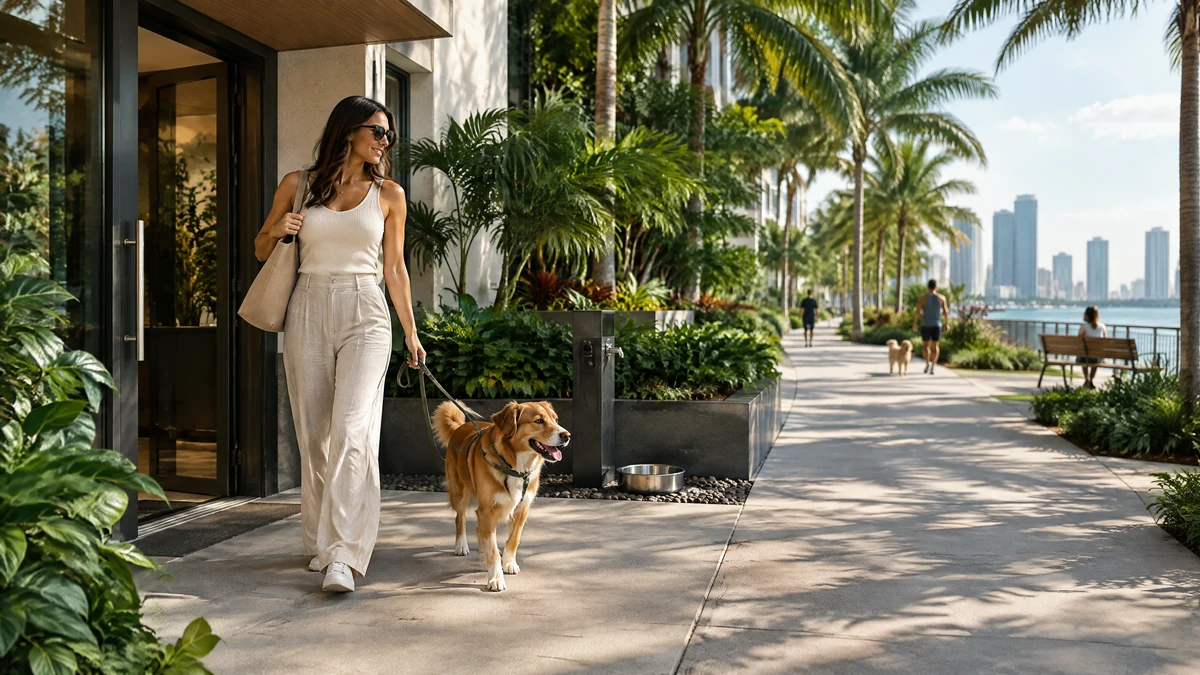
A building can allow dogs and still be inconvenient. Observe the elevator, identify the closest exit, and walk to the sidewalk. Ask about service-elevator use, relief areas, and lobby traffic. These details shape every morning and evening.
Test the daily route around a specific address
A dog does not experience Miami as a map of neighborhoods. It experiences the first minutes outside, the pavement, shade, crossings, and distance to a place to explore. Visit at the hours you expect to walk, not only at a convenient showing time.
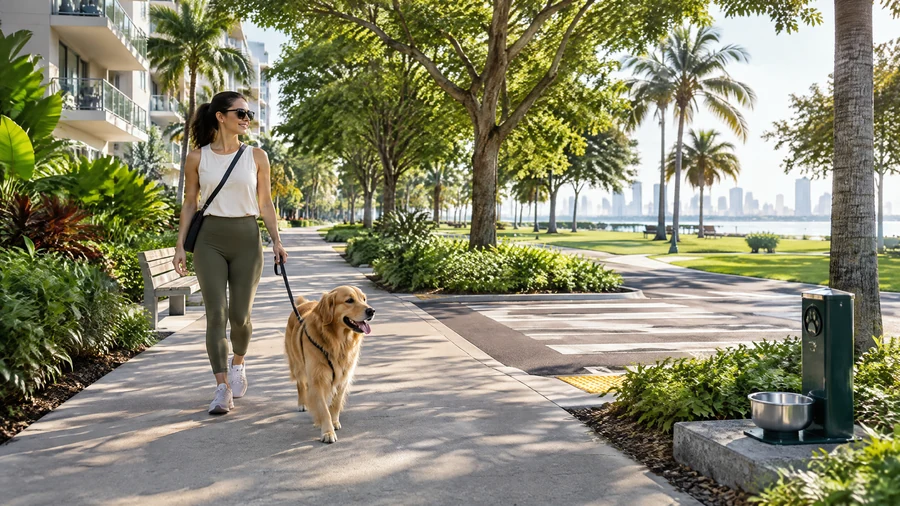
Use Park Finder from the property address and compare dog parks, trails, green spaces, and hours. Verify the route in person: a nearby park may involve difficult crossings, little midday shade, or an inconvenient return from work.
The Underline offers a useful example of how public amenities can support a pet routine. Its 10-mile linear park is dog-friendly, and the Chewy Bark Park in Coral Gables includes separate areas for large and small dogs plus an agility course. That makes it an amenity worth investigating for a nearby home, not proof that every property along a corridor will suit every dog. Check the actual walking distance, access points, current conditions, and any posted rules.
Miami’s heat belongs in the property decision
South Florida weather changes how a home functions for a dog. During a warm visit, notice hot surfaces, entrance shade, and comfortable places to wait. A shaded route can be better than a shorter exposed one.
Inside, consider flooring, ventilation, food and water space, and storage for leashes, towels, crates, and cleaning supplies. A high-rise may require more doors and elevators; a townhome may simplify access but add stairs. Compare the format with the dog’s age, size, temperament, and exercise needs.
Identify nearby veterinary, grooming, and backup-care options. For a second home, plan who will care for the dog during travel or schedule changes.
A practical decision matrix for your property tour
Create a simple scorecard before visiting. Rate each property from one to five on the criteria below, and write a short note rather than relying on memory.
| Criterion | What to check in person or in writing |
|---|---|
| Building fit | Rules, approval, limits, fees, common-area procedures |
| Door-to-sidewalk routine | Elevator, lobby, exit, crossing, and walkable first block |
| Outdoor comfort | Shade, surfaces, water access, and usable green space |
| Home layout | Flooring, storage, stairs, balcony or yard, and clean-up practicality |
| Schedule fit | Time needed for a morning walk, midday break, and evening exercise |
| Support nearby | Park options, veterinarian, groomer, and backup care plan |
| Second-home practicality | Who handles walks, maintenance, and unexpected needs when you are away |
A low score does not automatically eliminate a property; it identifies a solution, confirmation, or trade-off. If the route is weak or the rules are unclear, compare the operational effort and pause until documentation is complete.
Choose the home around the life you will actually lead
A dog can reveal whether a property fits the buyer’s lifestyle. Someone who walks before work may value a direct exit and shade; a frequent traveler may need dependable access and nearby care. Different dogs may require different layouts.
International buyers should plan visits, furnishing, local support, and daily management. The strongest shortlist has the fewest unresolved routine questions, not necessarily the most amenities.
Talk with Faccin before you narrow the shortlist
If you are considering Miami with a dog, ask Faccin for a property shortlist built around your actual routine. Share the animal’s size, age, exercise needs, your work pattern, whether the home is primary or occasional, and the building features that matter most. The consultation can help compare locations and properties, while written condominium rules and other property-specific conditions should be confirmed before you commit.
FAQ: choosing a home in Miami with a dog
What should I verify before buying a condo with a dog in Miami?
Request the current written building rules and confirm animal limits, size or breed provisions, approval steps, fees, common-area procedures, and any balcony or patio conditions. Treat the listing and informal assurances as starting points, not final confirmation.
Does a nearby dog park make a property pet-friendly?
Not by itself. Distance, shade, crossings, hours, access, and the dog’s temperament all matter. Use the location as one part of a route test, then confirm the building’s private rules separately.
How can I use Park Finder when comparing properties?
Search each property address, filter for dog parks or other amenities, review operating hours, and visit the route at the times you expect to walk. The tool helps organize public-park research; it does not confirm private condominium policies.
Is a high-rise or a house better for a dog?
Neither is universally better. Compare elevator and exit time, outdoor access, stairs, flooring, shade, yard maintenance, and the animal’s age and routine. The best format is the one that matches your daily schedule and capacity to manage it.
Can Faccin confirm that a building accepts my dog?
Faccin can help identify and compare properties, but the building’s current written rules and any required approval should be confirmed for the specific unit before you proceed.