





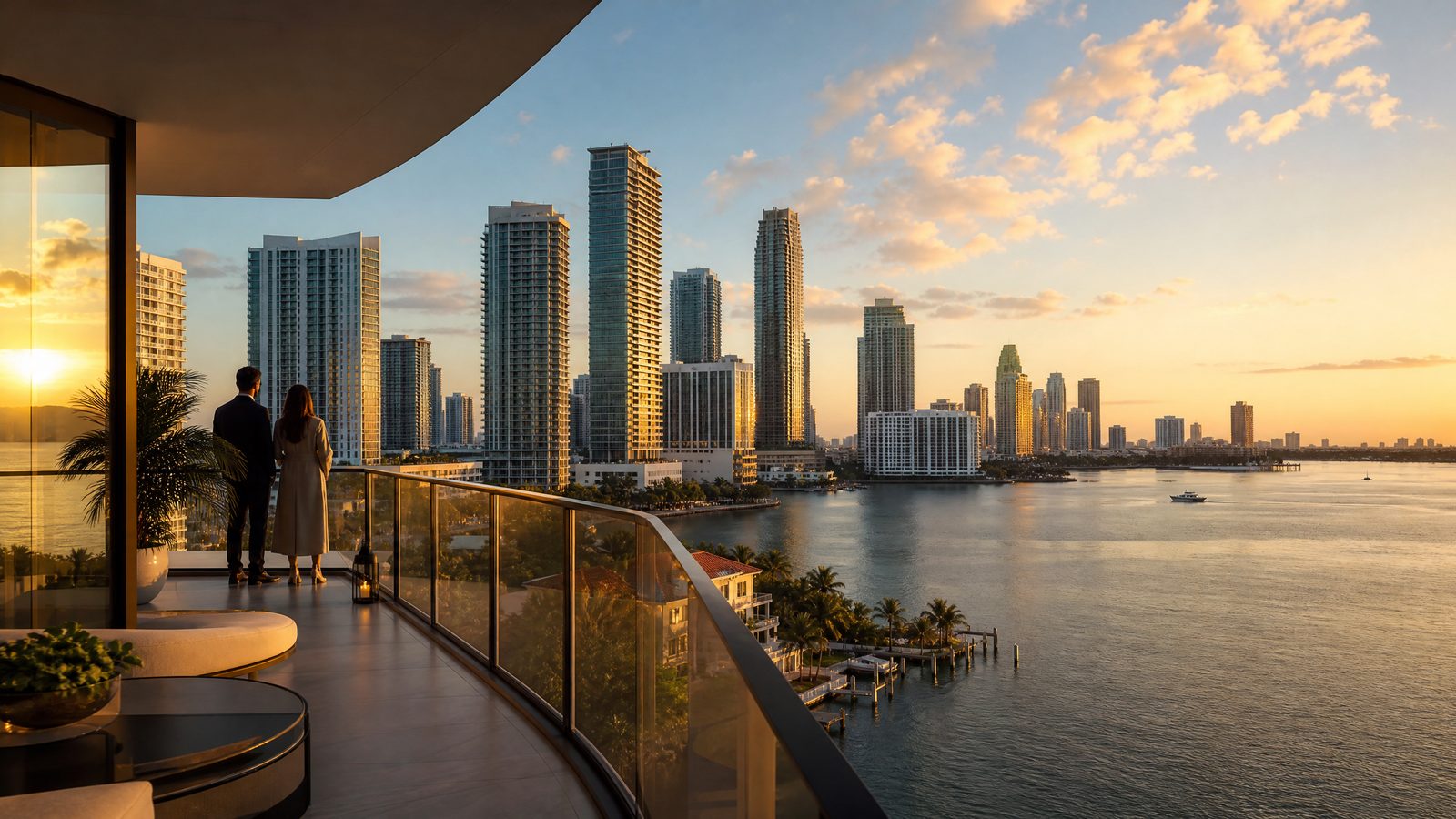
Miami is still pulling global buyers, but the real story is not just demand. It is how international families are becoming more selective, faster and more strategic before they wire capital into South Florida.
Miami’s international buyer story has entered a more mature phase. The city is no longer being discovered by global capital; it is being filtered, compared and stress-tested by families who already understand the appeal of South Florida. Recent figures released by MIAMI REALTORS show foreign residential purchases in South Florida rising to $4.4 billion in 2025, with 5,300 properties acquired by international buyers. The same market reading points to the region capturing about 10% of all international residential purchases in the United States.
Those numbers matter, but they do not tell the whole story. The more useful signal for investors is behavioral. International buyers are moving with shorter decision windows, clearer lifestyle expectations and a sharper view of dollar diversification. Many are not simply looking for a vacation apartment. They are weighing education, family mobility, currency exposure, rental flexibility, long-term ownership costs and the possibility of using Miami as a second base.
A global market that now rewards preparation
The new buyer journey is less improvised than it was a decade ago. Buyers arrive with neighborhoods preselected, building shortlists already narrowed and financial questions largely mapped out. According to MIAMI REALTORS, a majority of foreign buyers completed purchases with two visits or fewer to Florida, and a substantial share of transactions were all-cash. That does not mean decisions are easy. It means the most important advisory work now happens before the showing schedule begins.
For Brazilian and Latin American families, this preparation often includes questions that go well beyond square footage. Who will own the property? How will funds move into the United States? Is the purchase meant for personal use, rental income, future relocation or capital preservation? What tax, succession and financing implications need to be understood before a contract is signed? A beautiful view can start the conversation, but it cannot answer those questions.

Miami-Dade remains the center of gravity
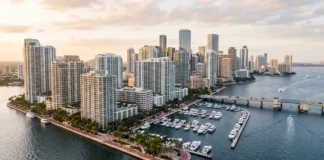
Miami-Dade continues to carry most of the international momentum in South Florida. That concentration is easy to understand. The county combines global air connectivity, private schools, multilingual services, luxury waterfront inventory, newer condominium product and a cultural environment that feels familiar to many Latin American buyers. But concentration also creates competition. The best-positioned assets, especially in buildings with strong governance and clear rental rules, tend to attract attention quickly.
That is why disciplined selection matters. A buyer comparing Brickell, Edgewater, Coconut Grove, Coral Gables, Miami Beach or Sunny Isles is not choosing only a place on the map. Each area implies a different daily routine, tenant profile, resale audience, building age, cost structure and liquidity pattern. In a market with international depth, the premium is usually paid not only for the unit, but for the predictability of the ownership experience.
What investors should watch next
The most important question for 2026 is not whether Miami remains attractive. The evidence suggests that it does. The better question is which assets can hold that attractiveness through insurance cycles, association budgets, financing standards and changing buyer preferences. International demand can support a market, but it does not rescue every purchase from weak due diligence.
For Faccin clients, the practical takeaway is simple: treat Miami as a serious cross-border investment decision, not as an emotional purchase dressed up as strategy. The right property should match the family’s use case, risk tolerance, time horizon and liquidity needs. When that alignment is clear, the city’s global demand becomes an advantage. When it is not, demand can hide risks that only appear after closing.
The next layer: comparing lifestyle, risk and timing
A stronger Miami search usually begins with a simple but overlooked distinction: the property that feels exciting on a first visit is not always the property that behaves best over a full ownership cycle. For one family, the right answer may be a lock-and-leave condo with strong services and predictable building management. For another, it may be a townhouse, a single-family home near schools or a newer condominium with flexible rental rules. The same market can serve very different goals, but only when the search is organized around the buyer’s real priorities.
Additional market context from Florida Realtors reinforces that Florida remains a central destination for international home buyers, especially when lifestyle, business access and dollar-based asset allocation overlap. That broader statewide demand matters because it confirms Miami is not operating in isolation. The city competes within a Florida ecosystem that includes Orlando, Tampa, Fort Lauderdale, Palm Beach and coastal lifestyle markets. Miami’s edge is its concentration of global services, culture, airports, luxury inventory and Latin American familiarity.
For readers comparing this article with earlier Faccin coverage, it is useful to revisit the Miami property buying process for foreign investors and the guide to Miami neighborhoods most sought after by foreign buyers. Together, those pieces help connect the macro demand story with the practical decisions that happen at neighborhood and building level.
What a well-advised buyer should clarify before touring
Before the showing schedule begins, the buyer should know whether the priority is lifestyle use, investment income, future relocation, portfolio diversification or a combination of those goals. That answer changes the search. A property selected for family use may tolerate different rental limitations than a property selected for yield. A long-term hold can justify a different approach to renovation, association fees and location than a shorter-term repositioning strategy. A buyer who expects financing should also evaluate timing, documentation and building eligibility earlier than someone paying cash.
The most efficient advisory process turns this complexity into a decision framework. It compares neighborhoods, product types, building rules, ownership costs, rental assumptions, liquidity and exit strategy before emotion takes over. That does not remove the personal side of buying in Miami. It simply makes sure the personal side is supported by a property that can stand up to financial and operational scrutiny.
Talk to Faccin before you choose your Miami strategy
International demand can make Miami feel urgent, but urgency is not the same as clarity. Faccin Investments helps foreign and Latin American buyers translate market momentum into a structured acquisition plan, connecting neighborhood selection, property analysis, negotiation, due diligence and cross-border ownership considerations. If you are evaluating Miami for family use, investment or long-term dollar exposure, start with a conversation before committing to a specific building or offer. Contact Faccin Miami to discuss the right strategy for your next purchase.